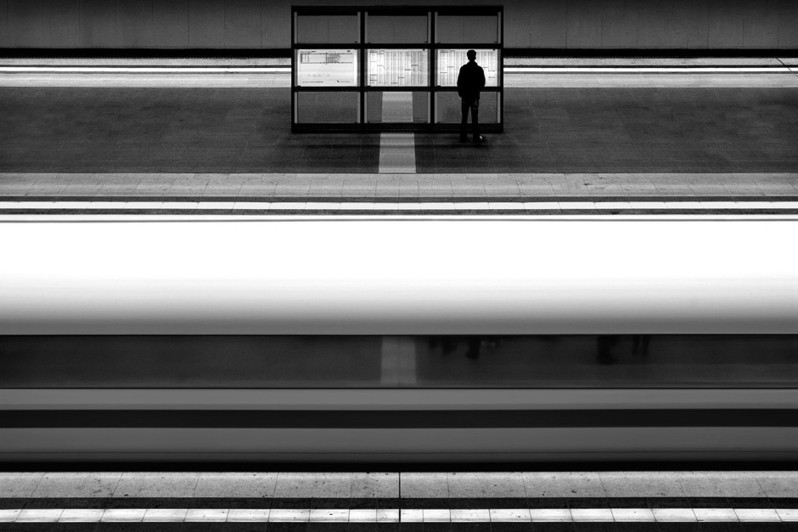
Absolutely amazing black and white photography by Kai Ziehl, you must check the rest of his breathtaking photographs on his portfolio site at kaiziehlphotos.com
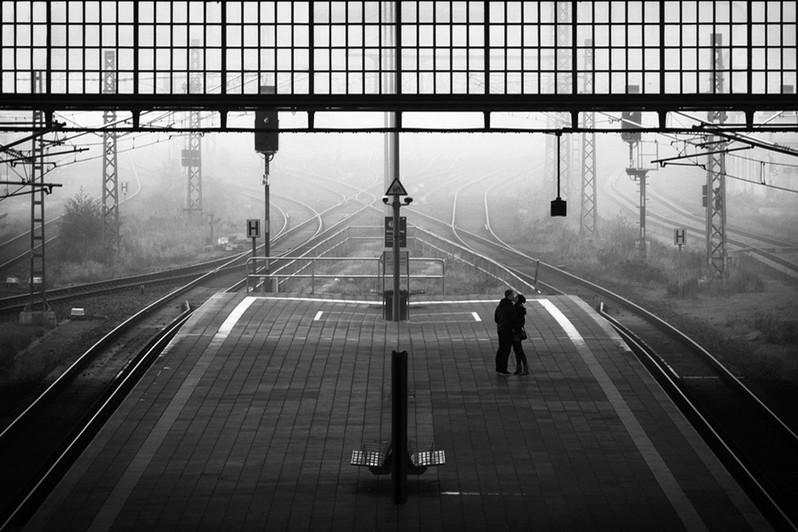
Absolutely amazing black and white photography by Kai Ziehl, you must check the rest of his breathtaking photographs on his portfolio site at kaiziehlphotos.com
“every genuine work of art has as much reason for being as the earth and the sun”
— Ralph Waldo Emerson
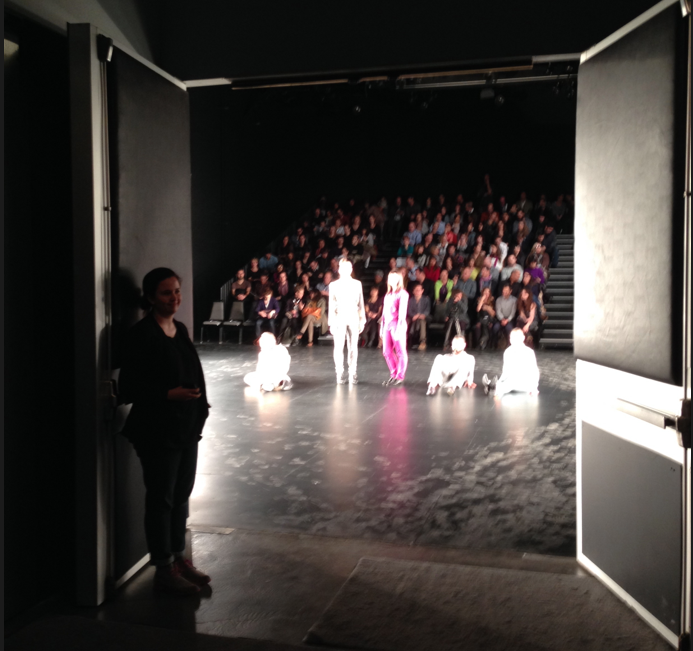
I like art that makes an entrance, this one does it while you enter. Under the brightest and harshest lights you are presented with tableaux as you saunter across the stage towards your seat. From there you get to enjoy tableaux plus performance of all those that came after you – maybe you were one of the lucky ones who came in as a group – late arrivals you had the stage kind-of all to yourself so might as well take a bow.
Now you might think that was the extent of your performance – and for many perhaps it was – but not for me.
The harsh examination lights continue and never waver or dim. The performers continue like stone. You get to go over the assemblage bit by bit. Your eyes rest on every detail. I for example notice, the multiple collars, cuffs and pockets, on the somewhat monochromatic 80’s/90’s ish denim and tucked in shirt ensembles being worn.
And then you wait, and wait and wait. Only you don’t get to do it from the comfort of a darkened corner, like a normal audience member, its bright as day in there, brighter! And meanwhile you start to get hot under the collar, it’s hot under these lights. And not a sound is being made, so you try to sit as still as possible. And you even control your breathing and your coughs. When will it start, so I can relax?
Finally, there is movement – but it’s subtle, barely there, really. There is sound – but it’s subtle. Eventually, has it been hours or minutes, there are even light cues, also subtle, but almost comical too, in that they offer hope of respite from the lights – but it’s only temporary. Let your mind wander for second and when you look up you catch a new arrangement – but stare at the performers intently and you only get excruciating effort, sweat and the occasional squeaks of rubber soles or skin on dance floor. Tiny indications of time passing. All mimicked, at least by me, by my own squeaks, exertions and hold-stillness.
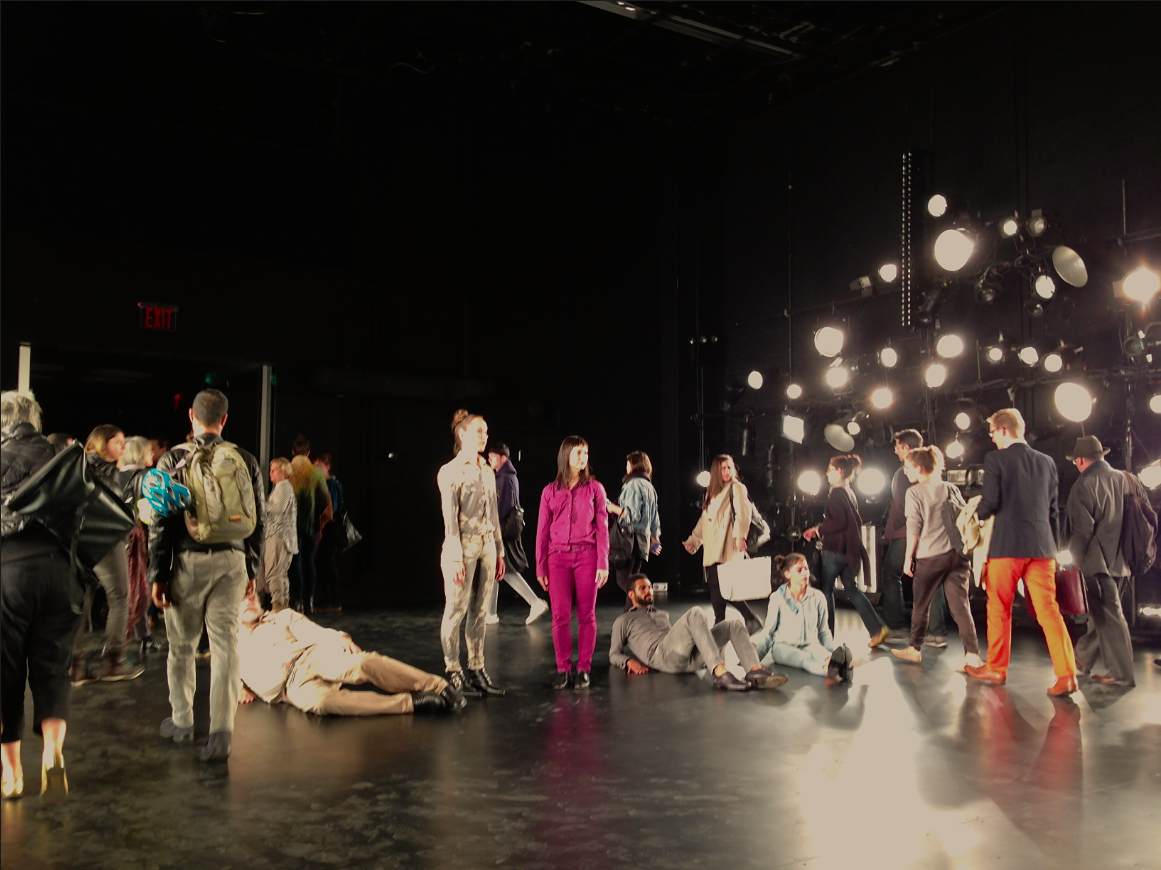
Now I’m not entirely sure making the audience feel self-conscious and performative was part of the plan, as it does make it doubly hard to “enjoy” a performance that is already somewhat taxing for the senses and the mind – but for me the parallels between performer and audience member enhanced the experience – even as every exertion by performer made me think of my own aching body and how no position is comfortable when you’re thinking about it and how for the performers any pedestrian movement when slowed down to such a degree requires extreme discipline as the pain and concentration is immense. I should know I’ve been there before – sometimes there is nothing harder than standing still unmoving for as long as it takes.
I’m not sure what to make of it, if the audience performer parallels were not intentional, there is still something there, but perhaps not enough to chew on? Could it be critiqued at “face” value as ultra minimal dance instead of audience interactive performance? perhaps.*
In any case – at the end of it all – phew what a workout. What a relief. But also a meditative, interactive, strenuous and in the end cathartic experience. Now that I think of it – ultimately a beautiful and sublime experience. I highly recommend it – but it’s definitely not for the faint of heart.
_______
read nytimes review for another perspective
*review of show, Hassabi’s previous minimally named performance at the kitchen – I’m starting to understand what she is working with here, I love it when dancers deconstruct and interrogate the very fundamentals of performance
“You see things; and you say, ‘Why?’ But I dream things that never were; and I say, ‘Why not’?”
— George Bernard Shaw

Of all the post-apocalyptic narratives out there this one is my favorite (although Daybreak is really good). There are no zombies here. Just the everyday reality of what would happen once the immediate threat disappears – and you’ve somehow survived.
The writing style seems to give people a lot of trouble, I think these are the same people who’ve never read a poem or for whom a minimalist painting somehow is a threat to their worldview. Either that or they are grammar nazis. But who is to say that every sentence needs a period or needs to be grammatically correct in a novel?
I think the writing style was one of my favorite parts of the book. Stream of consciousness style. Done really well I thought. Full of distractions, half thoughts, other people’s voices, memories… You get to really enter the mind of the character – who happens to be a pilot, own a dog, and share his somewhat miserable life (are their lives really any more miserable post-apocalypse then before?) with someone whose moral standards are a bit different from his own (but are they wrong or is survival the only thing that matters?).
These questions and others are presented as part of the, one could say mundane, existence of Hig. I guess all these zombie and other disaster movies try to show us that we are only a thin line away from utter chaos and reversion to an animalistic survival instinct and that societal niceties are the first to go – and this book shows those beautifully – but this book is also an amazing meditation on loss and longing under the circumstances. And really it’s the little things – amazing descriptions of flying, and gardening, fishing, the little pleasures in life – the only things left really – once everything else is gone – that really gave me joy and kept the pages turning.
Thank you Peter Heller, and thanks K for a great birthday read.
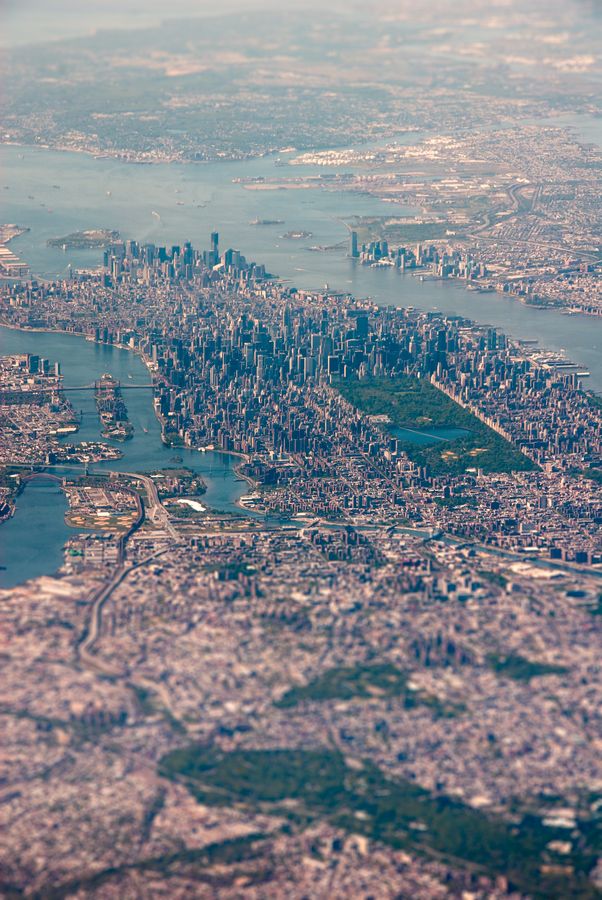
An unusual angle on the Big Apple courtesy of Tim Skylarov.
“No artist is ahead of his time. He is his time, it’s just that others are behind the times.”
—Martha Graham